
Maybe you are a few days into a month off alcohol. Maybe you are still deciding whether to start. Or maybe you typed this question into Google at 11pm because some part of you is starting to wonder what alcohol is actually doing to you.
Thirty days without a drink changes your sleep, your energy, your mood and your body in ways you can usually feel within the first week or two. But it also does something less predictable: it shows you what your life looks like when alcohol is not managing it for you.
For some people, that is a fairly straightforward discovery. They feel better, drink less afterwards, and move on with their week.
For others, thirty days turns out to be far harder than they expected, and that difficulty is information worth paying attention to, not a personal failure.
Quick Answer: What Happens in the First 30 Days?
First 24–72 hours
Dehydration, poor sleep, fatigue and low mood are common. If you are physically dependent, withdrawal symptoms such as shaking, sweating, anxiety and nausea typically begin here.
Week 1
Hangovers stop, hydration and energy start to stabilise, while cravings and mood swings may appear as the brain adjusts.
Weeks 2–3
Sleep, concentration and skin often improve. You may also notice how much of your social life was built around drinking.
Day 30
Many people report better sleep, steadier energy and improved mood, with possible liver and metabolic improvements depending on their previous drinking.
There is no universal timeline. What happens depends on how much and how often you were drinking, your general health, and whether your body had become physically dependent on alcohol.
Important medical guidance
Is It Safe to Suddenly Stop Drinking Alcohol?
Not for everyone.
If your body has become physically dependent on alcohol, stopping abruptly can trigger withdrawal. Symptoms range from shaking, sweating, nausea, anxiety and insomnia through to, in severe cases, seizures, hallucinations and delirium tremens, which is a medical emergency.
You should speak to a medical professional before quitting alone if you:
- Drink heavily every day
- Need alcohol to feel “normal”
- Shake or feel unwell when you have not had a drink
- Have used alcohol specifically to relieve those symptoms
- Have experienced severe withdrawal in the past
A medically supervised detox allows withdrawal to be monitored and managed safely. Foundations Bali provides 24-hour clinical supervision for people who need to withdraw safely before beginning the broader work of recovery.
The First 24 Hours Without Alcohol
If you are not physically dependent, day one can feel like an unusually rough, or unusually clear, morning after. You might be dehydrated, foggy, tired or anxious. Sleep may have been fragmented even if alcohol helped you fall asleep initially.
For someone who has developed dependence, withdrawal can begin within hours of the last drink. Anxiety, sweating, shaking, nausea and agitation are all common in this window.
Feeling genuinely unwell when you stop drinking is not a willpower problem. It is usually a sign that your body has adapted to alcohol being present regularly and needs medical support to adjust.
Days 2–3: The Hardest Stretch for Most People
For anyone experiencing withdrawal, these are typically the most difficult and potentially dangerous days, with symptoms often peaking here before easing.
Even without severe withdrawal, common experiences include:
- Poor sleep despite feeling exhausted
- Irritability or restlessness
- Anxiety or a low, flat mood
- Physical discomfort
- Intrusive thoughts about drinking
- A pull towards “just one” because you know exactly how it would make you feel
Regular heavy drinking reshapes the brain systems that regulate stress, reward and emotion. Removing alcohol does not return those systems to baseline overnight. Discomfort in these early days is often evidence of how used to alcohol your brain and body had become.
The First Week: Hangovers Disappear, but Something Else Shows Up
For most people, things start to settle by the end of week one. Acute withdrawal symptoms typically ease over several days, although sleep disruption, cravings and mood changes can linger longer.
If you were not physically dependent, this is often when the appeal of not drinking starts to show itself. There is no hangover to manage, no dry mouth and pounding head, and no scrolling back through messages to check what you said. Energy becomes more consistent and hydration starts to catch up.
When does sleep improve after quitting alcohol?
Alcohol makes you drowsy, but it disrupts normal sleep architecture and tends to produce lighter, more fragmented sleep. In the first few days of stopping, sleep can get worse before it gets better, especially after heavy drinking. For most people, it starts normalising over the following one to two weeks.
Something else tends to surface in week one: you start noticing exactly when you want a drink. Friday afternoon. Dinner with friends. After a hard day. When you are celebrating, bored, lonely, anxious, or think you have earned one.
That is the first real clue about the job alcohol has been doing in your life beyond simply being enjoyable.
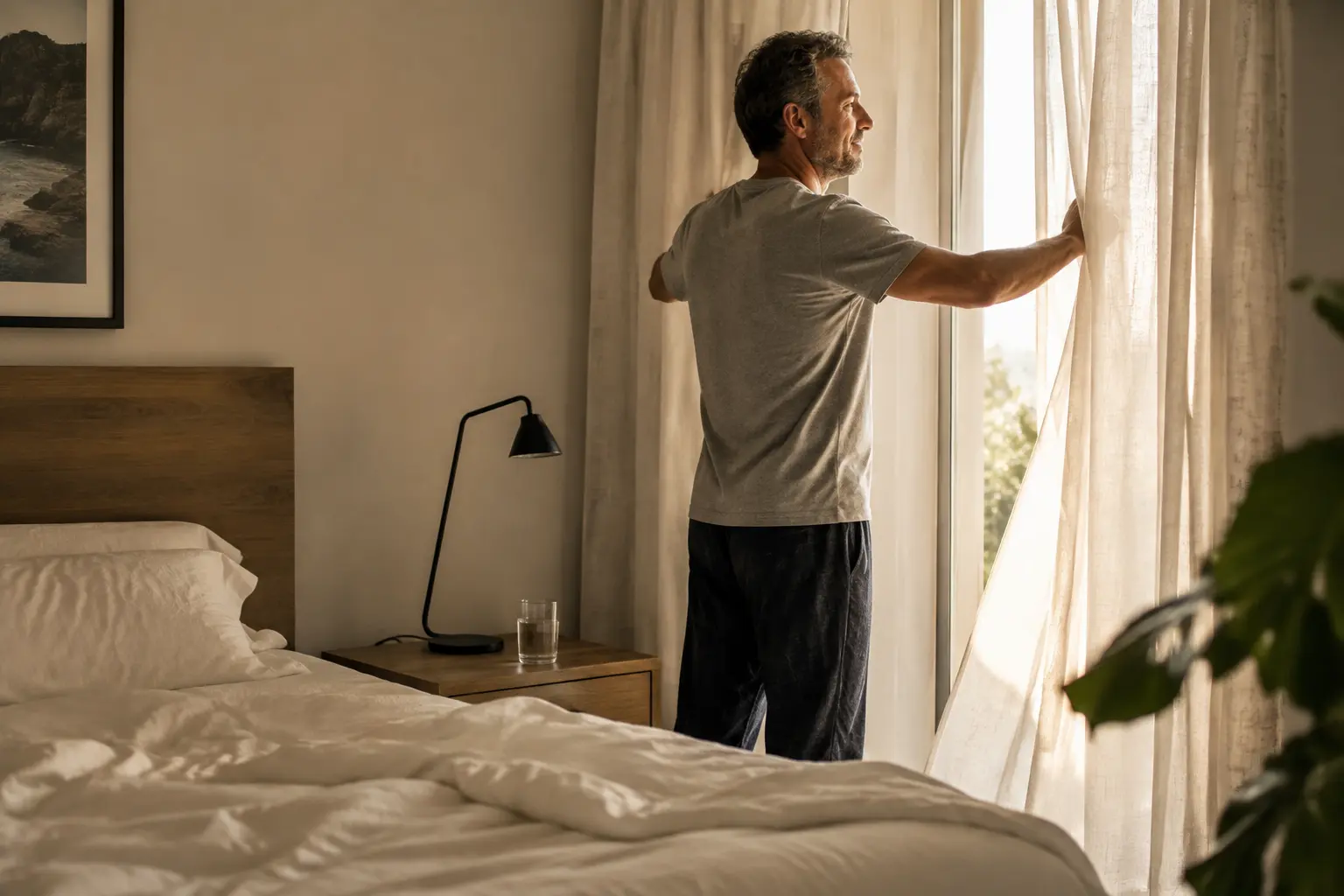
Two Weeks In: The Novelty Wears Off
By week two, not drinking has stopped being a novelty and started being your actual life. Depending on your previous habits, you may notice better energy, hydration, concentration and sleep. Some people notice less bloating or changes to their skin; some lose weight, although that is not automatic.
You have also likely met some real tests by now: a stressful week, a weekend, a dinner out or a party, and encountered your normal life without alcohol in it.
Why am I still thinking about alcohol two weeks in?
Thinking about a drink occasionally does not mean you have alcohol use disorder. How you are thinking about it is worth noticing. There is a difference between “a glass of wine would be nice” and actively negotiating with yourself:
One does not really count. I have already proved I can stop. I will start again tomorrow. There is no point going out if I cannot drink. Surely I can have one on Saturday.
Cravings, failed attempts to cut down, difficulty controlling how much you drink once you start, and continuing despite clear consequences are recognised features of alcohol use disorder. Stay honest with yourself about what you are noticing.
Three Weeks Without Alcohol
By now, physical changes are often easier to see: better sleep, steadier energy, clearer mornings, less bloating, sharper concentration and a more stable mood. If drinking was feeding your anxiety, you may notice that easing too.
There is no universal day-21 breakthrough. You might feel dramatically better, exactly the same, still anxious without alcohol, or find yourself counting down the days until you can drink again. Whichever is true tells you more about your relationship with alcohol than anything on a bathroom scale.
What Happens After 30 Days Without Alcohol?
By day 30, many people notice real, cumulative change across physical and emotional health:
- Better-quality sleep
- More consistent energy
- Sharper concentration
- No hangovers
- Better hydration
- Less bloating
- Improved mood
- Better productivity
- More money saved
- More present relationships
The less measurable outcome may matter more. You have now spent a month watching your life run without alcohol in it. That is new information about your energy, relationships, coping habits and how much of your identity was built around drinking.
Does your liver recover after 30 days without alcohol?
The liver has a strong capacity to repair itself, but there is no single answer to how much recovery happens in 30 days. Early fatty changes can start improving once drinking stops. More advanced alcohol-related liver damage usually needs much longer abstinence and medical management, and some damage may not fully reverse. If you are concerned, get a medical assessment rather than using a 30-day challenge as a diagnostic tool.
Will I lose weight if I stop drinking for a month?
Possibly, but it is not guaranteed. Alcohol is calorie-dense and influences food choices, appetite and activity levels, so cutting it can lower your intake. Weight change still depends on your whole diet, activity level, metabolism and previous drinking. Better sleep and energy often make healthier habits easier across the board.
Does anxiety improve when you stop drinking?
Often, yes. Alcohol temporarily dulls anxiety, but anxiety tends to rebound as it wears off. Heavy drinking also disrupts sleep and the brain chemistry that regulates mood.
For others, stopping reveals anxiety that was there all along, just masked. That usually means alcohol had become one way of managing something that still needs attention. Removing alcohol creates an opening to deal with anxiety, depression, trauma, loneliness or relationship stress differently, but it does not resolve them automatically.

What You Learn About Your Own Drinking Matters More Than Any Symptom List
Maybe stopping was easier than expected. Maybe you liked drinking but liked waking up clear-headed more. Maybe you realised you were drinking more often than you had admitted. Maybe almost every social plan involved alcohol. Maybe someone close to you said you seem different. Maybe you kept making exceptions to your own rules, hid how much you had, or drank again despite genuinely meaning not to.
Or maybe the idea of attempting 30 days felt uncomfortable enough that you never started.
None of that needs to become a label. It is information. The point of a 30-day break is to see clearly what happens when alcohol is taken out of the equation.
What If You Cannot Stop Drinking for 30 Days?
Not finishing a 30-day challenge does not automatically mean you are addicted. But repeatedly deciding you want to cut back and finding you cannot is worth taking seriously. Ask yourself honestly:
- Do I regularly drink more than I intended to?
- Have I tried cutting down before and ended up in the same pattern?
- Do I spend a lot of time thinking about when I can next drink?
- Have people close to me raised concerns?
- Has alcohol affected my work, relationships, finances or health?
- Do I hide or downplay how much I drink?
- Do I need more alcohol than I used to for the same effect?
- Do I feel unwell when I stop and drink to relieve it?
- Is my life starting to get organised around alcohol?
The useful question is not “Am I an alcoholic?” It is “Is alcohol having enough of an impact on my life that I want something to change?” You do not need to wait until it costs you your job, relationship, health or home before that answer counts.
Is 30 Days Enough to Reset Your Relationship With Alcohol?
For some people, a month off creates real distance from habitual drinking and leads to more conscious choices about alcohol afterwards.
But 30 days is not treatment for alcohol dependence or alcohol use disorder. If drinking has become compulsive, getting through a month does not address why you were drinking, what triggers it, how you handle cravings, or what is underneath it. Some people stop for a period and return to the same pattern because they have removed the alcohol without changing the system built around it.
What Comes After Day 30?
Clearing alcohol out of your system can happen relatively fast. Building a life that does not keep pulling you back to it takes longer: understanding what was driving the drinking, learning new ways to handle stress, anger, loneliness or boredom, repairing relationships, rebuilding physical health, and relearning how to socialise, travel, celebrate and relax without alcohol at the centre.
At Foundations Bali, our alcohol rehabilitation programme pairs personalised clinical care with practical recovery tools, movement, connection and real-world experience, helping people learn how to live without alcohol, not just abstain for a while.
Because the goal was never just surviving 30 days. It is building a life you do not need to keep escaping from.
If you have tried to stop and keep ending up back in the same place, or you are starting to wonder whether your relationship with alcohol needs more than another promise to yourself, you can talk to us confidentially. You do not need to have decided you “need rehab” to reach out.
Talk to Foundations Bali →Common questions
Frequently Asked Questions
What happens to your body after 30 days without alcohol?+
Changes vary depending on how much and how often you drank beforehand, but most people experience better sleep, more consistent energy, improved hydration and concentration, and better overall wellbeing. Longer-term reduction or abstinence brings further physical and mental health benefits.
How long does alcohol withdrawal last?+
Withdrawal can start within hours of the last drink, with acute symptoms usually improving within several days. Severity varies widely and can be life-threatening in severe cases, so anyone who may be physically dependent should get medical advice before stopping suddenly.
When does sleep improve after quitting alcohol?+
Sleep often gets worse before it gets better, particularly after regular or heavy drinking. It typically starts improving over the following one to two weeks as the body adjusts, though timelines vary from person to person.
Does your liver recover after 30 days without alcohol?+
Early, fatty liver changes can start improving once drinking stops. More significant alcohol-related liver damage usually requires much longer abstinence and medical management, and some damage may not fully reverse. Anyone concerned should get a medical assessment.
Will I lose weight if I stop drinking alcohol for a month?+
Possibly, if cutting alcohol reduces your overall calorie intake, but it is not guaranteed. Diet, activity levels, metabolism and prior drinking habits all play a role.
Why do I feel worse after stopping alcohol?+
Regular drinkers can experience disrupted sleep, anxiety and irritability as the body readjusts. If you are physically dependent, feeling genuinely unwell after stopping may be withdrawal, which needs medical attention.
Is 30 days without alcohol enough to break an addiction?+
No fixed period of abstinence guarantees that alcohol addiction has been resolved. Alcohol use disorder involves physical dependence, cravings, behaviour patterns and often underlying emotional triggers. Effective recovery addresses all of these, not just the drinking itself.
How do I know if I am dependent on alcohol?+
Warning signs include needing more alcohol for the same effect, withdrawal symptoms when you stop, drinking to relieve those symptoms, difficulty controlling how much you drink, and repeated unsuccessful attempts to cut down. A healthcare professional can properly assess dependence.
Do I need medical detox to stop drinking?+
Not everyone does. But if you are physically dependent, medically supervised withdrawal is important, since severe alcohol withdrawal can be dangerous. If you are unsure which category you fall into, get medical advice before stopping suddenly on your own.
What should I do if I have tried to stop drinking but cannot?+
Repeatedly trying and failing to stop or cut down is a strong reason to seek professional support. Treatment can help identify what is driving the pattern, manage withdrawal safely where needed, and build a more sustainable path forward than willpower alone.